
In this article
- POINT 1: MANY DIFFERENT TYPES OF INVESTMENTS ARE HELPING PORTFOLIOS HEADING INTO 2026
- POINT 2: STOCK PRICES ARE APPROACHING DOT-COM BUBBLE LEVELS
- POINT 3: AI IS DRIVING ECONOMIC GROWTH AND INVESTMENT RETURNS
- POINT 4: ECONOMIC GROWTH IS SLOWING BUT REMAINS POSITIVE
- POINT 5: THE IMPACT OF TARIFFS REMAIN UNCLEAR
- POINT 6: MIDTERM ELECTION AND GOVERNMENT DEBT WILL BE AT THE FOREFRONT
- POINT 7: THE FEDERAL RESERVE WILL SUPPORT THE ECONOMY
- MAINTAINING PERSPECTIVE IN 2026
For six out of the last seven years, the stock market has delivered returns above 10%. This impressive run was only interrupted by the 2022 downturn caused by high inflation. As a result, many investors find themselves in a strong financial position.
There's a saying that looking forward to something can be more exciting than the actual event. On one side, investors always want strong returns like these, which are clearly good for their investment accounts and financial goals. This is especially true as the market has expanded beyond just artificial intelligence stocks, international markets have improved, and bonds have helped support portfolios. On the other side, once these gains happen, investors often become worried, particularly when major market indexes are near record highs and stock prices are approaching levels seen during the dot-com bubble.
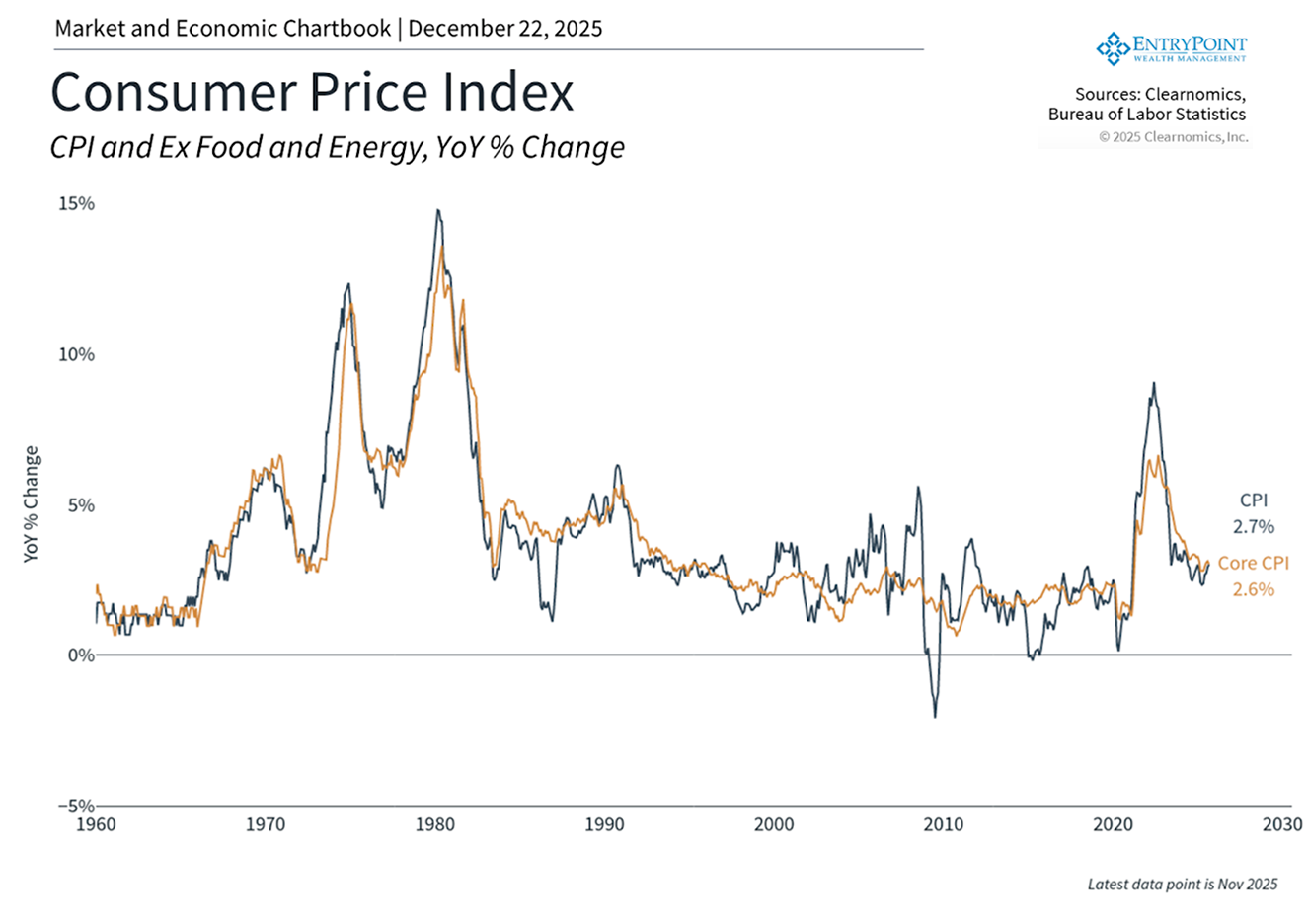
In 2025, we saw shifts in many of the challenges investors have dealt with recently. Inflation, which continues to affect household budgets, has leveled off around 3%. Tariffs (fees on imported goods), while higher than historical averages and a main cause of stock market swings in 2025, have not caused the economic problems many expected. The Federal Reserve (the U.S. central bank) has continued lowering interest rates, and the economy has grown at a steady pace.Looking at the bigger picture, one of the most important lessons for the new year is that what investors worry about most often doesn't happen. The recession many feared since 2022 never occurred. History shows that for every real market disruption, like the 2020 pandemic or 2008 financial crisis, there are many more feared events that never happen. The key for long-term investors isn't trying to predict which events will matter, but staying calm and disciplined in all market conditions.
As we look toward 2026, the investment world presents both possibilities and challenges. Topics likely to make headlines include the upcoming midterm election, new leadership at the Federal Reserve, the future of AI, growing worries about loans, changes in the U.S. dollar's value, and more. What matters most isn't whether investors can predict every change, but whether their portfolio is set up to handle uncertainty while capturing long-term growth. Here are seven important themes to help guide your thinking about the year ahead.
POINT 1: MANY DIFFERENT TYPES OF INVESTMENTS ARE HELPING PORTFOLIOS HEADING INTO 2026
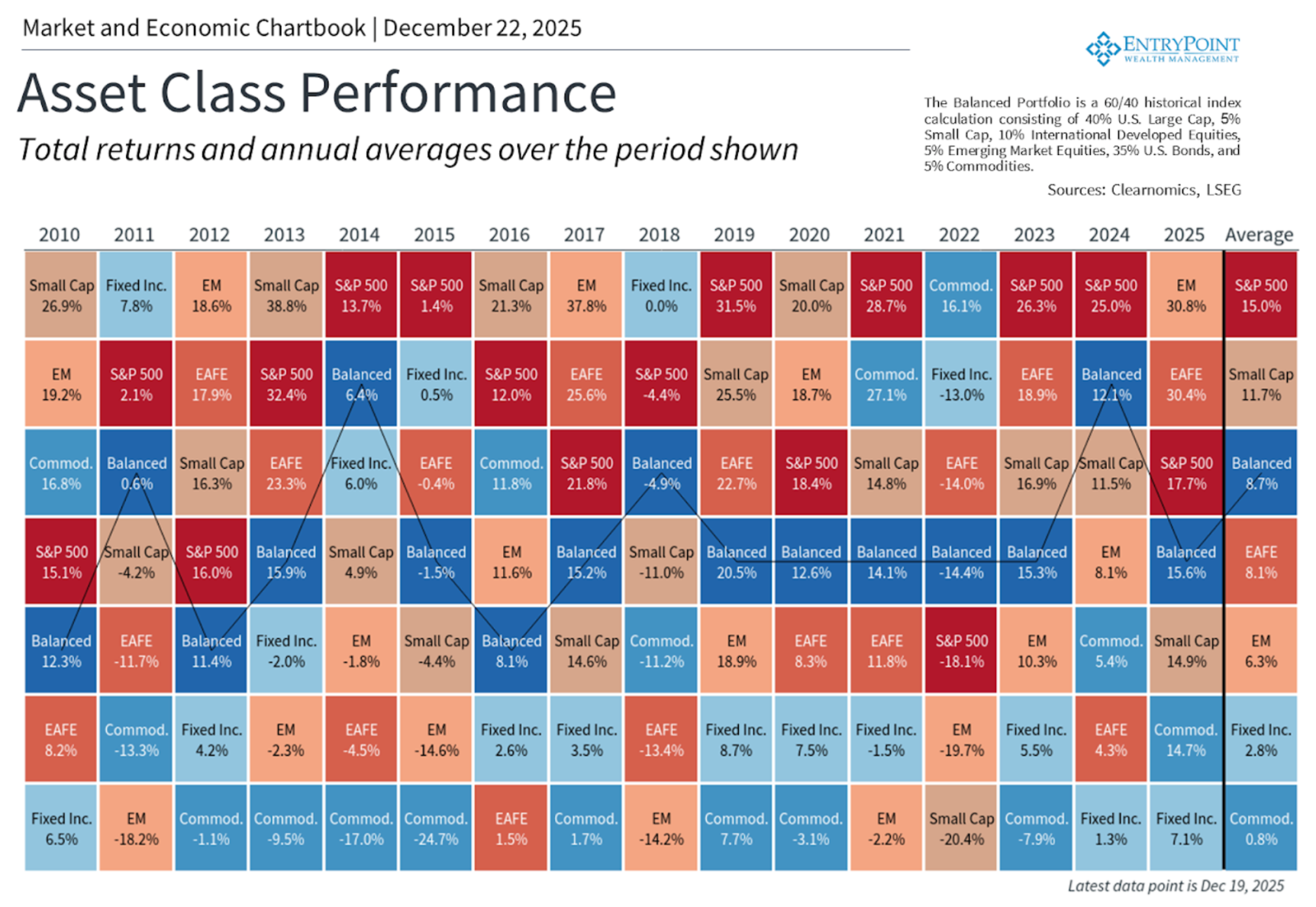
As we approach 2026, many different types of investments are contributing to portfolio gains. This is different from much of the past decade when U.S. stocks outperformed the rest of the world. In 2025, international stocks are doing better than U.S. markets, with developed market stocks (MSCI EAFE) and emerging market stocks (MSCI EM) each gaining around 30% in U.S. dollar terms. This has been driven by two main factors: improving growth expectations in many economies and the weakening dollar, which increases returns for U.S.-based investors.
Bonds are also playing an important stabilizing role in portfolios. The Bloomberg U.S. Aggregate Bond Index (a measure of bond performance) has gained 7% for the year as the Federal Reserve continues cutting interest rates and inflation stabilizes. Higher-quality bonds have been doing their job by providing income and helping to offset stock market ups and downs during periods of market uncertainty.
 Open full-size chart in a new tab
It should be noted that GOLD is not tracked in this table. EntryPoint has increased the asset classes held in our portfolios to reduce risk and increase potential returns. Gold was the best performing holding in our client portfolios in 2025, adding ~45% since we added it to portfolios in March. We expect this trend to continue and will continue holding an overweight position in Gold and International investments as the US Dollar continues to weaken.
In the coming year, this highlights the importance of balance and spreading your investments across different types. While it may be tempting to make sudden portfolio changes based on news headlines, investors who stick with their financial plans are likely to be rewarded.
POINT 2: STOCK PRICES ARE APPROACHING DOT-COM BUBBLE LEVELS
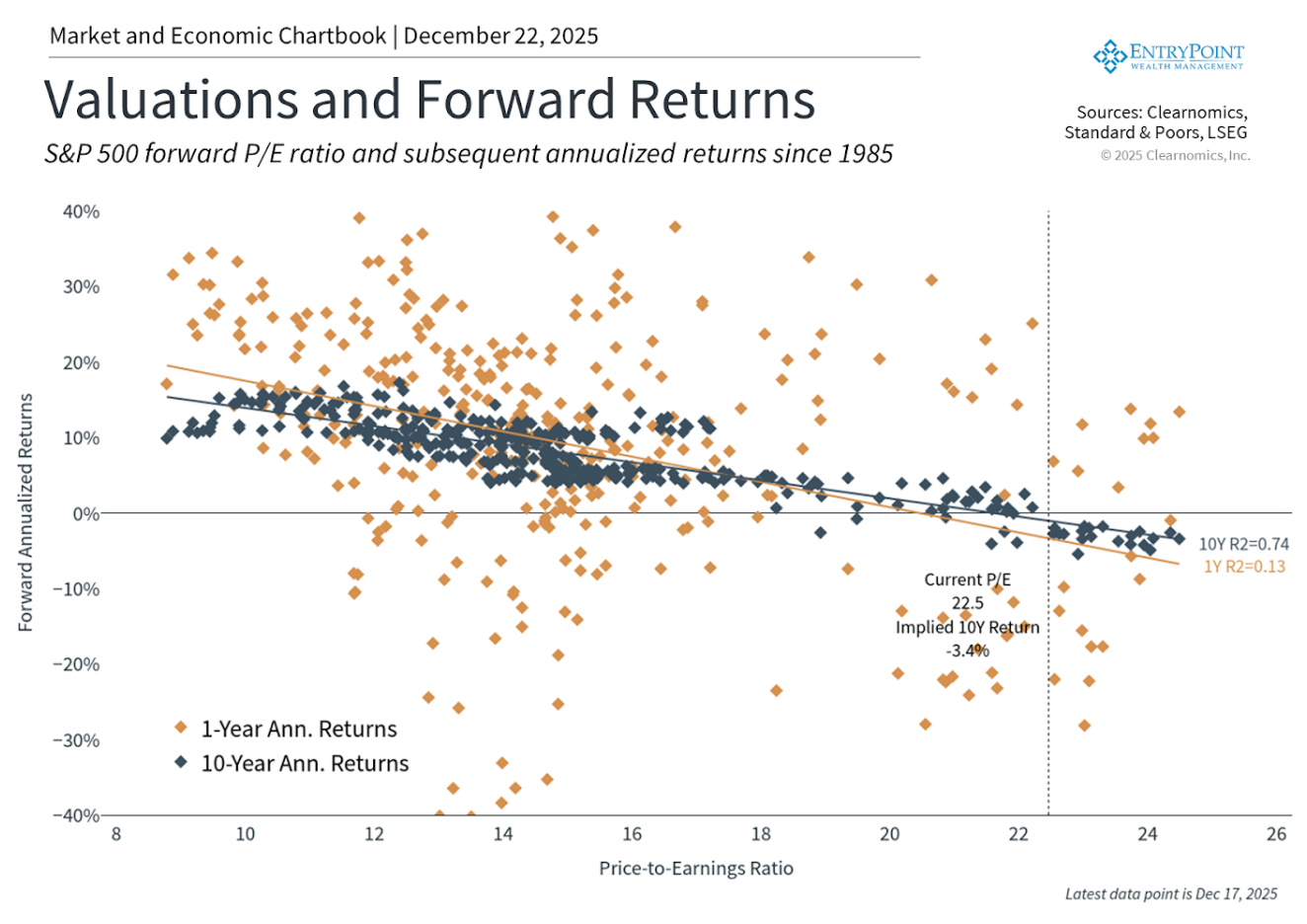
One result of the strong returns over the past several years is that stock prices continue to rise. The S&P 500 (a major stock market index) currently trades at a price-to-earnings ratio of 22.5x, approaching the all-time high of 24.5x reached during the dot-com bubble. This means that investors are paying more for each dollar of future company earnings than in recent years.Investors typically worry about stock prices when they become disconnected from company performance. For example, the dot-com bubble experienced historic price levels that far outpaced revenues and earnings, as investors rewarded any company related to the "new economy." While prices are expensive today due to excitement around AI and ongoing economic growth, company fundamentals remain strong. Earnings have grown at a healthy pace, with expectations they could continue to do so according to consensus estimates data by LSEG.
 Open full-size chart in a new tab
POINT 3: AI IS DRIVING ECONOMIC GROWTH AND INVESTMENT RETURNS
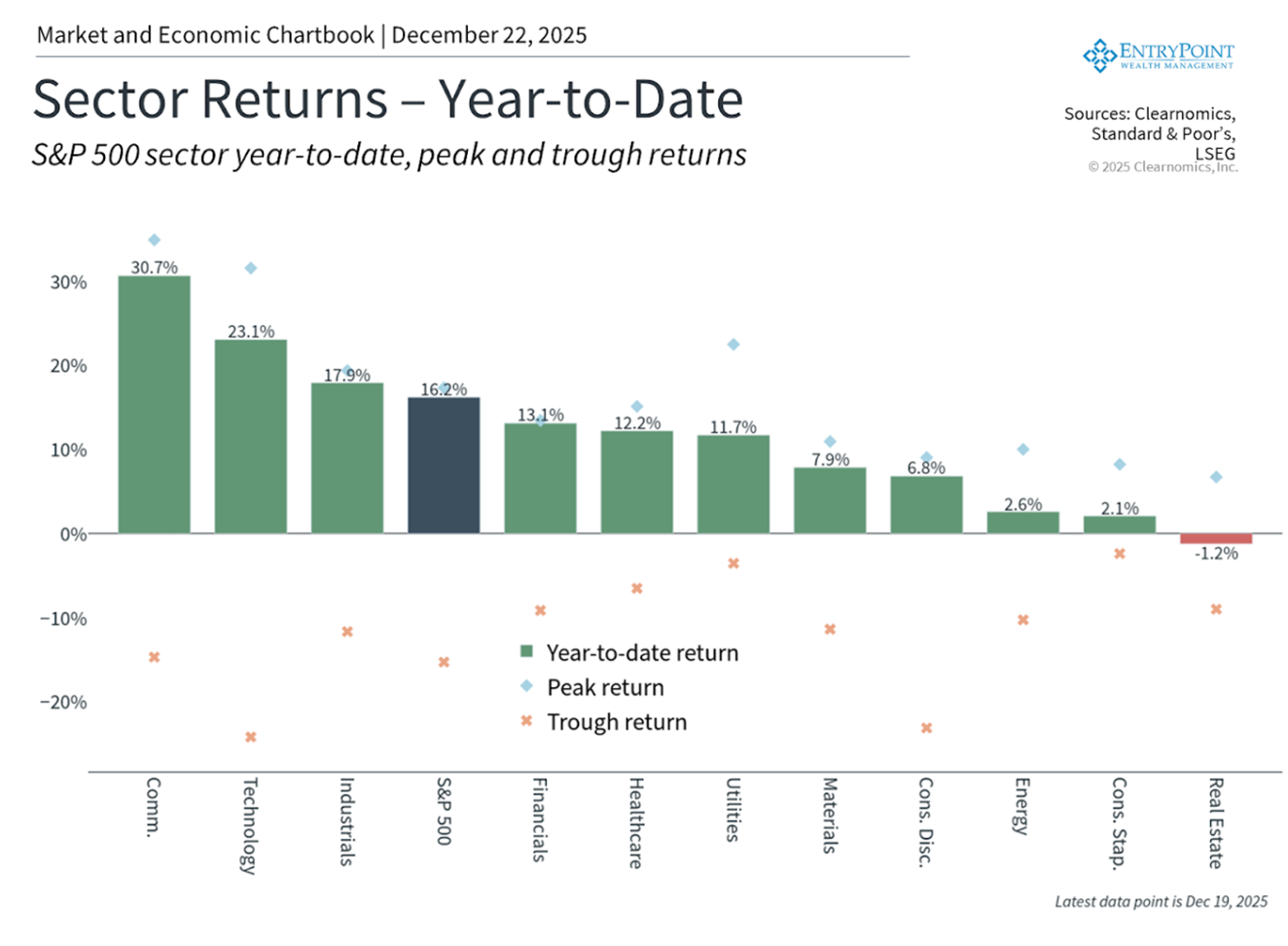
Perhaps no single trend has captured investor attention more than AI (artificial intelligence). Spending on AI infrastructure reached extraordinary levels in 2025, with the total investment easily reaching trillions of dollars. This includes building new data centers, purchasing equipment such as GPUs (specialized computer chips), and hiring AI researchers.
Some of these investments involve deals that seem circular. For example, Nvidia invested up to $100 billion in OpenAI, which in turn is buying millions of Nvidia's chips. These interconnected relationships have raised concerns about whether the AI ecosystem can sustain itself if enthusiasm wanes.These trends reflect the reality that AI requires infrastructure that few companies can afford alone. The question is whether the technology will ultimately generate enough value to justify the enormous spending. As it stands, AI investment is currently a large contributor to the overall economy.Surveys suggest that businesses are increasingly adopting AI into their workflows. According to the Census Bureau's Business Trend and Outlook Survey, the share of businesses reporting use of AI more than doubled from 4% in September 2023 to 10% in September 2025. The share of businesses that anticipate using AI over the next six months rose at a similar rate, from 6% to 14% over the same period.1 While these numbers have jumped, they still have significant room for growth.
 Open full-size chart in a new tab
POINT 4: ECONOMIC GROWTH IS SLOWING BUT REMAINS POSITIVE
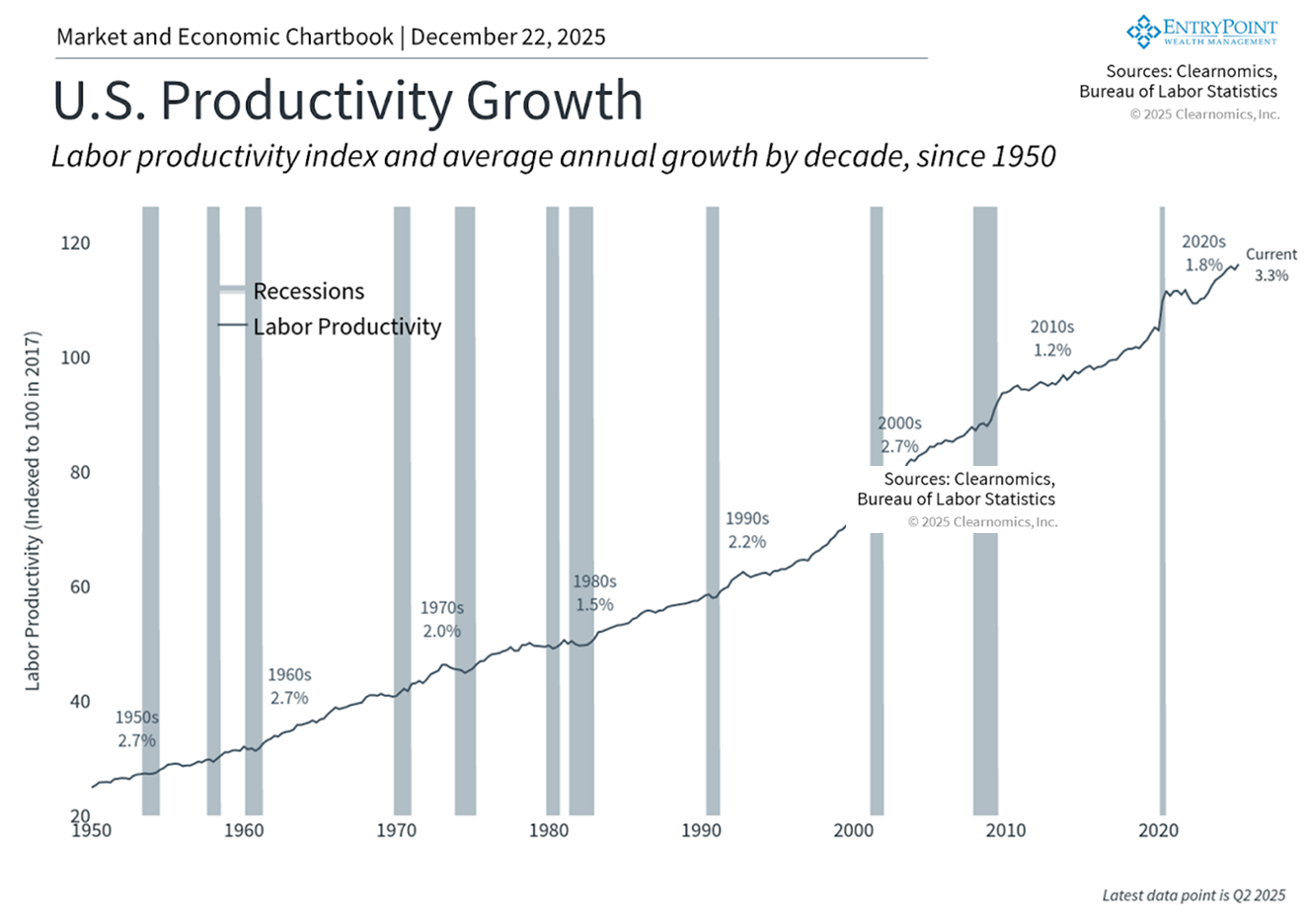
Economic growth trends have slowed but remain stronger than many had feared. U.S. GDP (Gross Domestic Product, which measures the total value of goods and services produced) experienced a slightly negative dip in the first quarter of 2025, but this rebounded quickly as tariff uncertainty faded. The 3.8% growth rate in the second quarter not only exceeded expectations, but is one of the strongest quarterly growth rates in years.
When it comes to global GDP, the International Monetary Fund projects that growth could ease just slightly from 3.2% in 2024 to 3.1% in 2026. Advanced economies are projected to grow around 1.5%, while emerging markets are projected to maintain growth above 4%.
Although positive overall, economic growth has been uneven across different income groups and sectors. This concept is often referred to as a "two-speed" or "K-shaped" economy, since some experience growth while others struggle.
In today's economy, this divergence is primarily driven by technology trends, since those positioned to benefit from the growth of AI could experience greater job prospects than those in traditional industries. However, it's not just about AI, since consumer debt, auto loan delinquencies (late payments), and other financial challenges can affect whether individuals benefit from economic growth.
 Open full-size chart in a new tab
POINT 5: THE IMPACT OF TARIFFS REMAIN UNCLEAR
While tariffs were the primary driver of stock market volatility in 2025, their economic effects have been mixed. In fact, one of the ongoing puzzles is how little immediate impact tariffs have had on inflation and growth. Despite tariff costs increasing ten times their average level compared to prior years, measures such as the Consumer Price Index (a measure of inflation) have ticked up only slightly.
There are several possible explanations as to why tariffs have not had their anticipated effect. First, many of the announced tariffs were quickly paused or scaled back. Second, many companies absorbed the initial cost of tariffs by keeping their prices steady and importing goods ahead of tariff announcements. Finally, strong consumer spending, government stimulus, and healthy growth in AI-related sectors helped offset any negative impact on overall growth. It's also worth noting that the Supreme Court may rule in 2026 on the legality of the economic justification used for these tariffs.
For long-term investors, these recent developments, along with the first round of trade negotiations in 2018, highlight the fact that tariffs are part of the government's playbook. Rather than reacting to these tariffs as a shift in the world order, they instead represent tools for the administration to support broader policy goals. While tariffs aren't going away, their impact on day-to-day market activity could diminish.
 Open full-size chart in a new tab
POINT 6: MIDTERM ELECTION AND GOVERNMENT DEBT WILL BE AT THE FOREFRONT
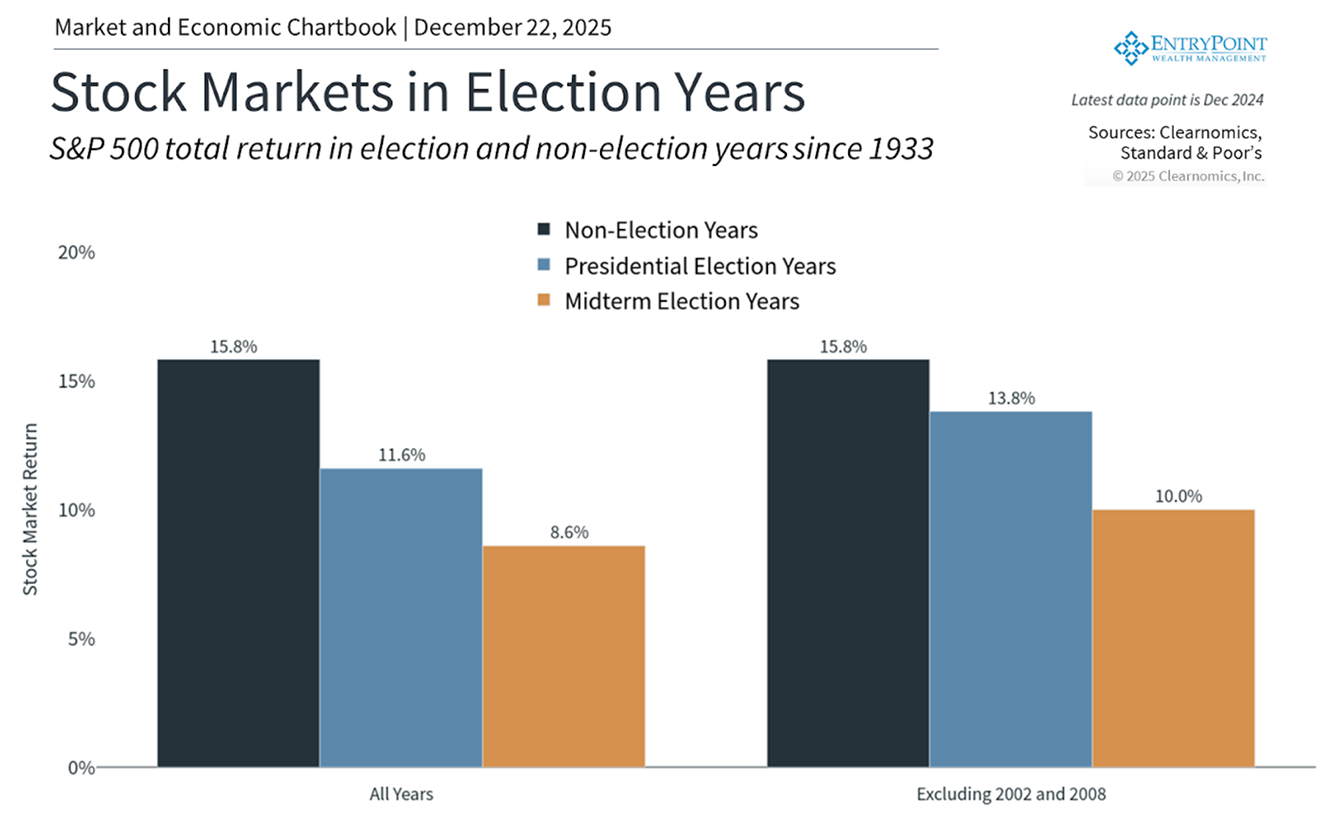
In addition to changes in trade policy, 2025 also had a historic 43-day government shutdown and ongoing concerns over the size of the budget deficit (when the government spends more than it takes in). At the same time, the recently passed One Big Beautiful Bill Act (OBBBA) tax legislation has created more clarity for investors and taxpayers.The new year will begin with more uncertainty in Washington as the short-term funding bill expires at the end of January. This means there could be another wave of negotiations that could result in another government shutdown. Then, some investors expect households and businesses to benefit from greater tax refunds due to provisions in the OBBBA such as full expensing of research and development (allowing companies to deduct these costs immediately).Looking further ahead, investors will likely shift their attention to the midterm election and what it could mean for tariffs, regulation, government spending, and more. The chart above shows that midterm elections have historically experienced healthy returns, averaging 8.6% since 1933, even if they are slightly lower than non-election and presidential election years.Still, the biggest concern for many investors is the ever-growing national debt. The truth is that the historically high national debt, which is hovering around 120% of GDP for total debt, or over $36 trillion, is unlikely to be solved any time soon. In fact, it's estimated that the OBBBA could increase the national debt by over $4 trillion in the next decade. As it stands, the national debt amounts to over $106,000 per American.
 Open full-size chart in a new tab
POINT 7: THE FEDERAL RESERVE WILL SUPPORT THE ECONOMY
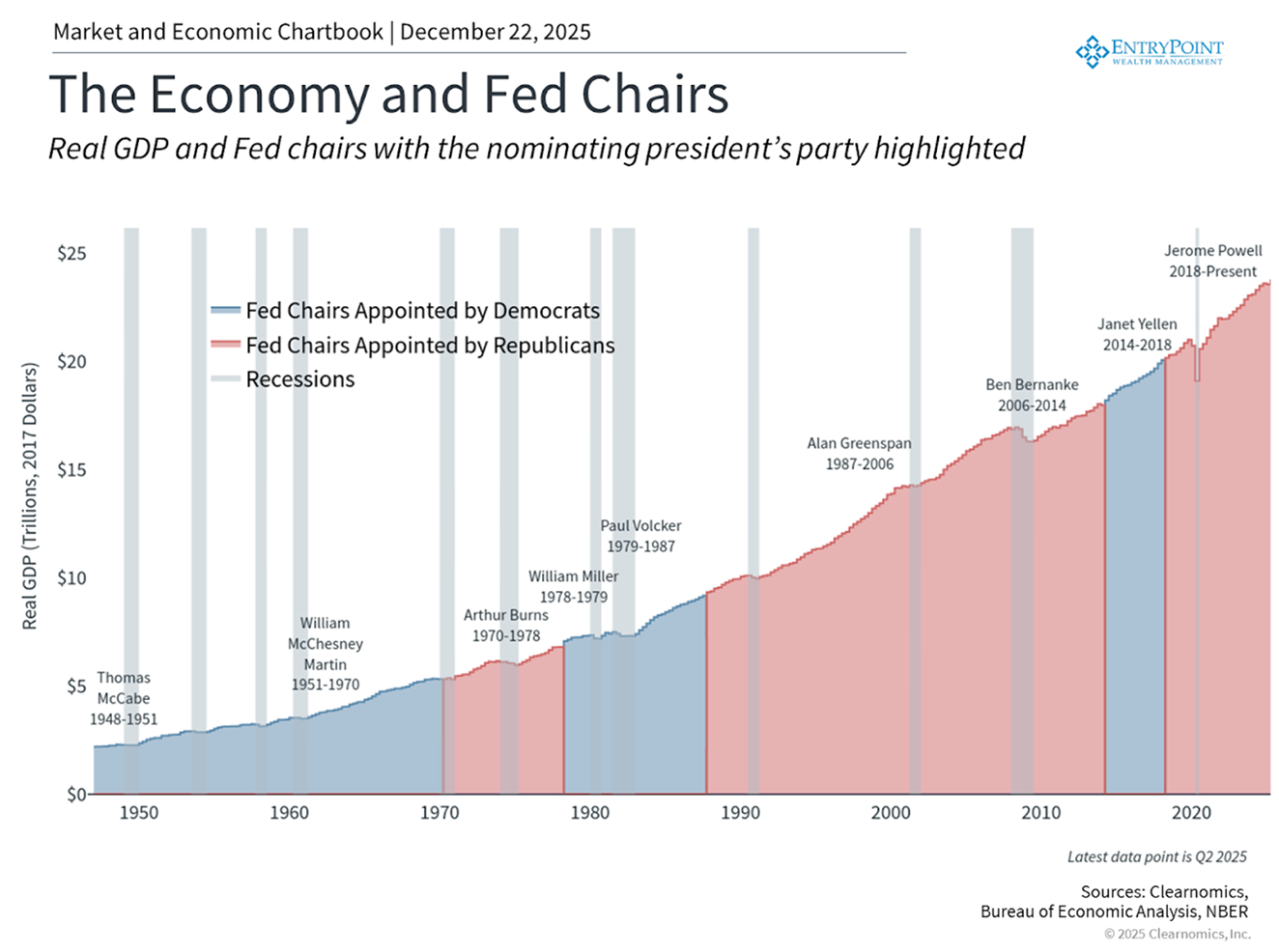
The Fed resumed cutting interest rates in September after pausing earlier in the year. As we enter 2026, the path of monetary policy could become less certain. This is because the risk of runaway inflation may no longer be the primary concern as a weaker job market has grown in importance. This requires small adjustments to policy rates rather than dramatic shifts, such as those seen in 2022.An additional complication is that Fed Chair Jerome Powell's term will end on May 15, 2026, paving the way for new leadership at the Fed. The White House is expected to appoint a successor who may favor additional rate cuts to support the administration's economic agenda of lower interest rates.The chart above shows that the economy has performed well across Fed Chairs appointed by both parties. It's important to note that the Fed only controls the "short end" of the yield curve (the relationship between interest rates and time to maturity), that is, interest rates that are closely tied to the federal funds rate (the rate banks charge each other for overnight loans). Long-term interest rates depend on many other factors, such as economic growth, inflation, and productivity. So, rather than follow the Fed's every move and analyze every statement, investors should continue to focus on these longer-term trends to understand the impact on interest rates and bonds.
 Open full-size chart in a new tab
MAINTAINING PERSPECTIVE IN 2026
As we enter 2026, investors face a familiar challenge: balancing concerns with the reality that markets have consistently rewarded patient, disciplined investors over time. The list of worries is ever-present, yet history suggests that for every crisis that disrupts markets, many more feared events have failed to happen. What separates successful long-term investors isn't the ability to predict which concerns matter most, but the ability to stay balanced throughout all phases of the market cycle.The bottom line? Markets have delivered strong returns, but high stock prices and slower global growth suggest more modest expectations for 2026. Rather than attempting to time the market based on any single concern, investors should focus on maintaining balanced portfolios positioned for various outcomes.
Now is a great time to step back, review your portfolio, and ensure it’s aligned with your long-term goals. Reach out to me today. so we can position you for 2026 with greater clarity and confidence.